

In 2026, it’s safe to say Linux has never been more popular, whether because of Windows 11’s sluggish performance or updates that make things even worse. But on the government end, the problems might be similar to ours, but the stakes are much bigger.
With China joining Europe in the race to reduce its dependence on Microsoft, this isn’t exactly a new movement. Join us as we explore government initiatives tackling the same issues, their impact, and why recent developments paint a much rosier future.
In this piece, we take a look at the project that started it all, the reasons they went back to Windows, and whether they abandoned their idea completely.
What Led to the Birth of the LiMux Project
Back in 2003, the Munich City Council was running their business machines on the 32-bit OS, Windows NT 4.0. Since support for the OS was ending the next year, they had two options in front of them: Upgrade to Windows XP or enter the Linux World. Munich voted in 2003 for the Linux-based solution, LiMux (with M for Munich), officially launching in 2004.
On the surface, it looked like a no-brainer, as it would result in increased data security and massive savings both from licensing fees and zero or minimal hardware update requirements.
Since using Linux involves open-source software, the council feared running into legal troubles due to software patents. Hence, they conducted a risk assessment. Once they were convinced, the actual migration began in 2006.
The Success and Challenges of the LiMux Project
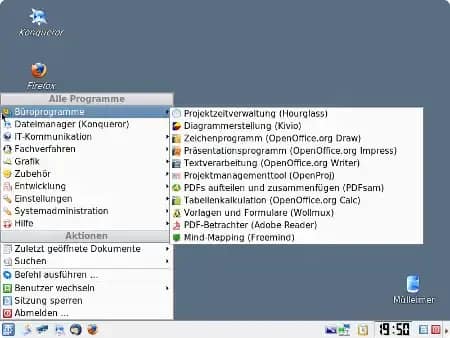
At this point, you might be thinking, “Hold on, did Munich run unsupported Windows NT 4.0 machines for nearly two years?” Yes, that’s precisely what happened, fatal as it may sound. The rollout, however, was incredibly strategic, beginning with only 100 computers.
If you have ever switched from Windows to Linux, you would have felt at least a little uneasiness while moving from MS Office. Switching into the Linux world is a bit like tapping into an alternate Earth where you can run incredibly fast, but the ways of movement won’t always match what you’re accustomed to.
To make the transition seamless, a tool named Wollmux was developed to increase the capabilities of OpenOffice, which would have helped the council maintain consistent letterheads and form templates, among others.
By October 2013, the Munich City Council had migrated over 15000 desktop PCs to Linux. It seemed like everything was going well, until an unlikely development began to shake that foundation.
Why Munich Ditched LiMux and Returned to Windows
In 2014, Munich’s Mayor, Dieter Reiter, and Deputy Mayor, Josef Schmid, considered going back to Windows due to alleged productivity issues. While some key officials said that most issues were organizational, which could be solved by switching to LibreOffice, and that they saved almost 10 million euros, the council decided to move back to Windows in 2017.
They decided to move all their systems back to Windows by 2020. The most interesting part of this development, however, came a year later. In 2018, the journalistic group Investigate Europe released a video documentary claiming most workers were satisfied with the OS.
Council members hinted that the decision was a personally motivated one by the mayor, who denied that the reversal was in gratitude for Microsoft moving its German headquarters back to Munich in 2016.
While it’s tough to know for sure what had really transpired, the entire LiMux saga reiterates the harsh realities of the tech world. The difference between the number 1 and number 2 isn’t always product quality. The company’s connections and the target audiences’ convenience and habits play a major role as well.
Has Munich Abandoned the LiMux Project Entirely?
While Munich did go back to Windows, the core idea of digital sovereignty hasn’t changed. The city of Munich hasn’t shut the door on Linux entirely. In 2020, they promised the use of open source software where it’s financially and technologically feasible.
In 2024, they took another step forward in this direction when they announced a five-point open-source plan and founded an Open Source Program Office (OSPO) to co-ordinate open source deployment and strengthen Munich’s position with regard to data security and governance.
The same year, it also allocated 200,000 Euros to OSPO for short-term municipality employees and external programmers.
Takeaways
When you think of Governments ditching Windows, the first two things that come to mind are digital sovereignty and licensing cost savings. But catering to the habits and convenience of your target audience is what could potentially take a company to the top, even if the product may not be superior.
What’s even more interesting is that almost two decades later, Linux is fighting the same battle: convincing people with workflows baked into Microsoft-heavy workflows to give their product a try.
Leave a Reply