
If you’re here, you’re probably aware of how expensive mobiles have become due to rising component prices. These components include semiconductors, RAM, and storage chips. What you might not realize, is how different the market has become in comparison to previous years,
In this piece, we will cover what this change looks like when you’re online or in the market for a new phone. Additionally, we will talk about where companies are making compromises to price their products competitively, possible options and creators in this space well worth your time.
Shopping for a Phone in India in 2026? Here’s the Reality
I remember buying the Poco M4 4G back in 2022 at somewhere around INR 14000, which was among the most aggressively priced phones around that time. Back in that period, 5G phones were slowly entering the market, though 4G phones were still more easily available. As of July 2026, the market has changed massively. Here’s what you will find and where companies are making compromises.
The INR 10,000 Market Has Almost Disappeared
Back in its prime, the Indian Smartphone Market around the 10K market was insane. People just bought the Redmi Note 4, and it lasted them for years flawlessly. Today, the 10K segment has very few options.
One of the best options in this segment, the Poco C81x as of July 2026, offers 3 GB RAM and 64 GB of Internal Storage. In the promotional material, you’ll find that it features a “powerful octa-core processor”.
However, what it won’t tell you upfront, it features a Unisoc processor. This is similar to what happens in the budget laptop segment. The salesman would try to show the “Intel Inside” sticker and say that you’re getting an Intel processor, and he would be right.
But you might eventually realize that it’s a dual-core Celeron. So, when you are looking for a budget, take steps to understand the full picture and not just what the company wants you to read.
Price Boom & Availability Issues
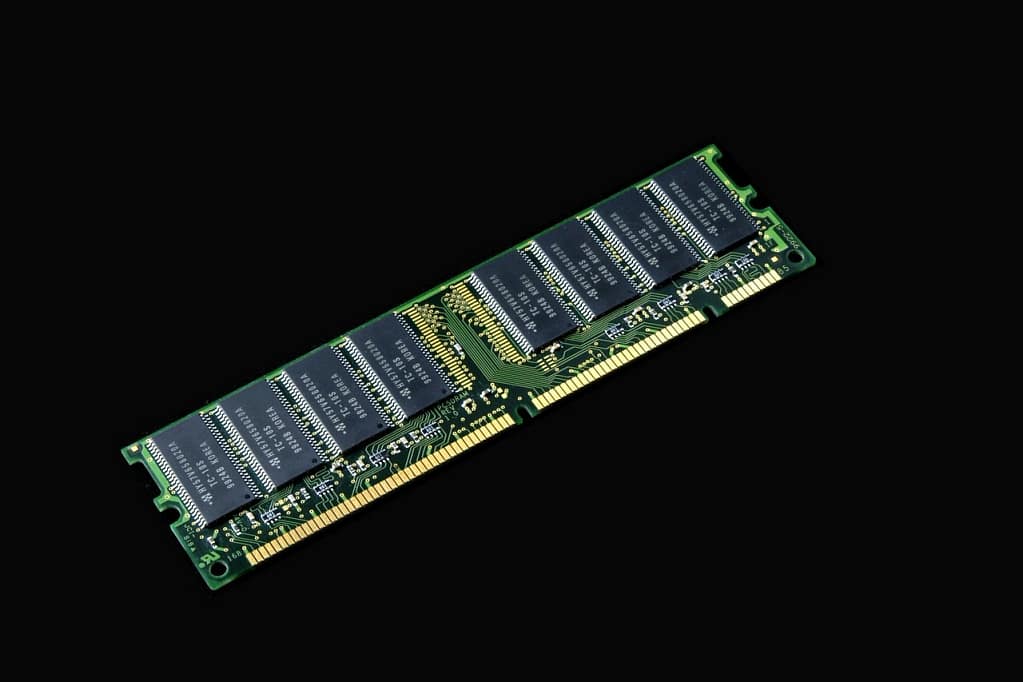
There has been a substantial increase in mobile phone pricing as of late. Budget phones have seen price increases of anywhere between INR 3,000 and INR 5,000. For instance, the Poco M7 Plus (8GB/128GB) launched on August 13, 2025, at a regular price of INR 14,999. As of July 2026, the same phone variant is priced at INR 17,999.
But that’s far from the only hurdle you will face. You could easily look up the best phone at a certain budget, note down the specs, and assume the market isn’t as grim as people claim. Then, you head to Amazon or Flipkart, only to find the model you wanted is either out of stock or undeliverable.
And no, this isn’t a pin-code problem, either. I tested this directly on Flipkart across multiple saved delivery addresses spanning different states, and the same models remained “Out of Stock” for every single location.
It shows that the brands aren’t just raising prices; they are actively struggling with stock allocation. So, if you see a phone that you really like, check delivery for yourself or family right away. You could also try local offline stores that might still hold older unsold stock-though keep in mind, shopkeepers know when an item is in high demand, and their pricing will likely reflect it.
HD+ Resolution Screens Even at INR 20,000 Segment
When you think of one mobile department that has suffered the most because of RAM price increase, it is the screen. Earlier, it was quite common to see phones with FHD+ screens around the INR 13,000 to INR 15,000 segment. If you were lucky, you might even find an AMOLED screen.
Today the options have become severely limited. For instance, you can find Samsung Galaxy A17 (4GB/128GB) at INR 15,944 (as of July 2026) featuring an FHD+ AMOLED screen.
But you won’t find many better options than that around that budget, at this time. What you might be shocked to know is that the OnePlus N6, which was launched on June 30, 2026, features an HD+ display at INR 22,999 (4GB/128GB).
Focus Towards Battery Life
For a long time, most phones had a battery capacity between 5000 mAh and 6000 mAh. But now, as manufacturers have begun cutting corners, especially in the context of screen quality, they have upped the battery capacities in new phones to attract customers. Now, you can easily see phones with batteries around 7000mAh or 8000mAh.
As a result, you’ll find more phones with “power” branding or promotional material focusing on their battery life. In my opinion, that has been the only positive of this RAM pricing boom. Much like the OnePlus phone mentioned above, the Real Narzo 100x 5G, which was launched on July 15, 2026, features an 8000mAh battery.
That pretty much explains the state of the phone market up to the INR 20,000 segment in 2026. The screen resolutions are dropping while the batteries are getting bigger.
What Options Does a Customer Have?
Until now, we discussed the changes one sees in the phone market compared to previous times. Stock availability issues only make the issues worse. Here’s what you can realistically do as a customer-
Focus on One or Two Priorities
Instead of looking for a phone that ticks all or most of your requirements, prioritize one or a few that you absolutely can’t compromise on. For instance, if regular OS upgrades are your biggest concern and your budget is around INR 15,000, you could go for Samsung F70e (4GB/128GB) at INR 13,999 (as of July 2026), which promises 6 generations of OS upgrades.
On the other hand, if your priorities are battery life and performance and you’re looking for a phone around the INR 22,000 segment, Moto G57 Power 5G is among the best options. As of July 2026, it is priced around INR 21,999 (8GB/128GB), featuring a Qualcomm Snapdragon 6s Gen 4 processor and a 7000mAh battery.
However, if you are fine with an older phone, the price-per-performance ratio is great in second-hand devices.
Buying a Second Hand or Refurbished Phone

As RAM prices have increased the price of new phones, it isn’t surprising to see that the previous-generation phones seem more attractive now. Therefore, it can be said that in many instances, older phones provide the best bang for your buck, conditions applied.
For example, I recently purchased a second-hand Poco X6 Pro (12GB/512GB) at INR 16,000, which was launched on January 11, 2024 at INR 26.999. By going through this avenue, I got a MediaTek Dimensity 8300 Ultra processor-powered phone, which is an insane return on investment.
Had I looked for a new phone, I couldn’t have found much better options than a MediaTek Dimensity 6400-powered Moto G37 Power (4GB/64GB) at INR 14,999 (as of July 2026).
While there are benefits to owning a second-hand phone, there are certain risks or trade-offs you have to accept before heading down that route. For instance, Poco X6 Pro initially shipped with Android 14 out of the box and was promised 3 years of OS upgrades. So, it can go as far as Android 17.
A newly launched phone that ships with the latest Android version and delivers 2 years of OS upgrades delivers much better value in this aspect. The gap gets even wider if you’re opting for a Samsung phone that is often significantly generous with upgrades.
Another thing that gets quietly overlooked is the price of components. For instance, you might be purchasing an old INR 27,000 phone at INR 16,000, but if something goes astray, you can’t be expecting the repairs to cost the same as a phone of the latter budget.
Additionally, even if you buy from OLX or stores like Cashify that provide a 6-month standard warranty on their refurbished phones and a limited-time refund or replacement window, the risks never truly disappear.
Top YouTube Channels in the Indian Mobile Review Market

Perfect Gadget
In my opinion, Perfect Gadget is one of the most underrated Indian mobile tech review channels on YouTube. What makes this channel different from ordinary ones is how detailed and unique the analysis is. When a new phone drops, it isn’t among the quickest to drop a review or a first impressions video, but when it does, its videos are often among the most informative ones.
For instance, I remember one of his videos where he showed how a specific phone vibrated unevenly due to the camera bulge if you used the phone on a flat surface. Insights like these make his videos stand out because they can only be discovered by someone who has used the phone sincerely.
Geeky Ranjit
This channel has been around a long time, and there isn’t a lot that can be said about the channel’s founder, Ranjit Kumar, that hasn’t been said already. I believe the channel’s greatest strength is its fierce commitment towards its audience. Ranjit Kumar doesn’t shy away one bit from either praising or calling out big corporations for their work.
In one of his videos, he mentioned advising his audience like he’s talking to his younger brothers, and that shows in his work. Although he is often seen reviewing mid-range or premium phones, he only recommends value-for-money ones. If you are also someone who looks for phones in these segments, you’ll find his videos particularly interesting.
Gyan Therapy
The channel’s biggest strength is how well it translates tech jargon to everyday consumers. Rakesh Kumar, who owns and runs the channel, uses simple language to explain his reviews and experiences. Although he usually reviews high-end phones, he isn’t afraid to call out the manufacturers if he thinks something is needlessly over-hyped or useless.
He often exposes shady marketing practices and tech scams happening in the industry, which remains among his best and most unique content. If you’re curious about value-for-money premium phones, Gyan Therapy definitely deserves a follow.
TechBar
Sanchit Shokeen, who runs the channel Tech Bar, takes quite a different approach to tech reviews. His videos are quite stylized and focus on the aspects of phone reviews that a regular user interacts with the most. These include display immersion, UI aesthetics, and in-hand feel of phones.
While he covers a wide range of topics within his niche, his phone review videos are often detailed and well-explained. If you prefer visually rich videos that give you an honest feel of mid-range and premium smartphones, you’ll find his content worth your time.
Technology Gyan
Much like the other entries in this list, this channel is dedicated to providing honest reviews to the audience, but with a funnier presentation. He often cracks jokes and includes memes in his videos to keep the viewers engaged while giving them genuine, jargon-free reviews in simple language.
Apart from mobile and occasional laptop reviews, he only takes on important topics that are relatively less discussed. For instance, Manoj Saru, who runs the channel, recently covered how to choose the best processor at every budget. I remember one of his old videos where he discussed the advantages and disadvantages of cellular and Wi-Fi internet connections.
Final Takeaway
AI companies have caused RAM and storage prices to increase, which has only created more burden on the people. To stay competitive in pricing, companies have downgraded the screen resolutions in phones up to the INR 20,000 segment in favor of battery capacity.
Therefore, customers can either focus on one or two priorities and select the phone that stands out to them or look to the second-hand market for a better ROI, conditions applied.
Leave a Reply