
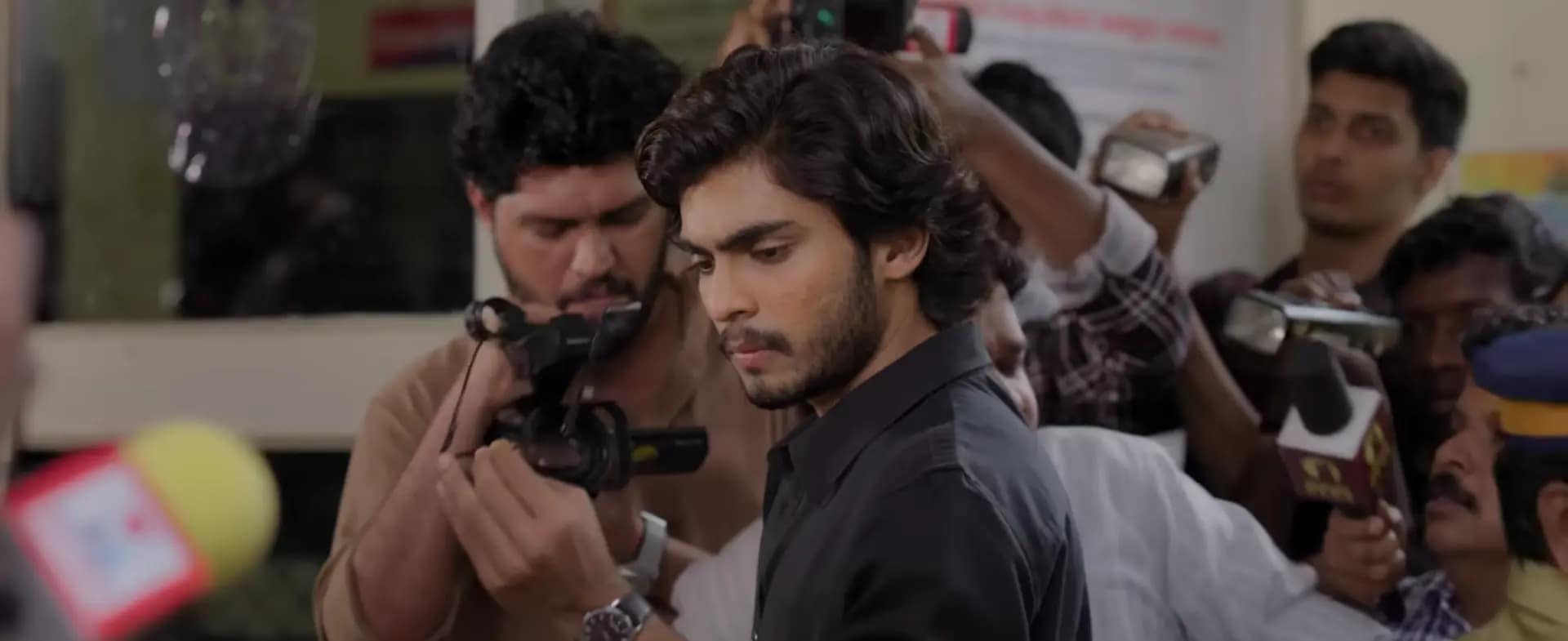
Barring a few hiccups, Abhinav Sunder Nayak’s Mollywood Times starring Naslen is an absolutely fantastic watch. In fact, this is easily one of the most entertaining films I have watched in a long time.
However, note that while the film is a dark comedy and maintains that tone throughout, the early part functions more like a typical subtle comedy. As a result, you might enjoy those sequences more than the rest. Therefore, it almost feels like two films clubbed into one.
Plot Overview: Ambition, Ghostwriters, and Industry Realism
The film initially follows Sachin (Sharaf U Dheen, young Sachin portrayed by Sreejith Shine), son of renowned Malayalam Horror novelist Vaikom David (Jagadish). Fed up with not measuring up to his father’s legacy, Sachin attempts suicide as a child but doesn’t go through with it. Upon learning this, his father tells him that his entire legacy is manufactured.
His literary career is built by using the unpublished work of his late lover, Anuradha, along with a network of ghostwriters. However, one of his ghostwriters, Peter, exposes the truth through David’s novel, Devil’s Island. David manages to recover all copies of this book, except for one in the possession of an aspiring filmmaker, Vineeth Madhavan (Naslen).
Their paths cross at a prestigious film contest won by filmmaker Arjun Ravidas (Sangeeth Prathap), where Vineeth comes in second place. Sachin offers Vineeth the chance to work on his film, which he agrees to. The rest of the film follows Vineeth’s journey as he tries to make an impact in the Malayalam Film Industry, the obstacles he faces along the way, and how their paths keep crossing.
The Sharp Writing Maintains A Fine Balance Between Comedy & Realism
The film is written by Ramu Sunil, and he has done a flawless job. The writing of this film strangely reminded me of Netflix’s Dark (2017-20), because, much like that show, everything is so well-connected here. Even minor interactions like a random guy handing a manuscript or a fast-food worker doing a pizza delivery have a much bigger impact on the story than what you might initially realize.
You expect Malayalam film characters to feel real, but the treatment towards them is even more impressive here. For instance, even though the film protagonist is Vineeth and terrible things keep happening to him throughout, they didn’t try to cover his shortcomings to make the audience feel sympathetic towards him.
Point in case: in one crucial scene, Vineeth destroys the original print of his film, and later, another character reminds him that any film doesn’t belong to the director alone; it’s a result of the collective efforts of many. Similarly, when his friend, Sujhith Raj Vi “Suji” (Roshan Shanavas), leaves his project to make his own film with his rival, he isn’t portrayed as a villain but rather as a normal guy making a critical decision.
It’s also praiseworthy how the writer managed to weave in themes of system corruption in the film industry, connections, friendship, tough circumstantial decisions, ego, and the role of luck behind one’s success. They managed to do all this without sounding preachy and instead chose a fun route or a less dramatic route to tell their story.
Direction: Tonal Shifts, Runtime, and Technical Missteps

Abhinav Sunder Nayak’s direction is splendid, though there are a few things that could have been better. As I previously mentioned, the film can be treated as a subtle, funny film for some time and the remainder as a drama with the treatment of a dark comedy. These tonal shifts are intentional, though. Nayak has used the film’s early sequences to mirror Vineeth’s initial idealism before dragging Vineeth and the audience into the frustrating realities of the industry.
He manages to keep you engaged for the most part, but the songs didn’t leave any impact. You keep waiting for the songs to end so you can get on with the story. Furthermore, with a substantial runtime of 2 hours and 47 minutes, the film could have benefitted if the songs were kept purely for promotion.
Another thing that didn’t resonate with me was the choice to focus on Vineeth as the camera goes on a complete 360. There are two similar sequences, and I understand that the creators might have used this technique to alleviate the scene since writing is a pretty unglamorous and tiring work in itself unless the reward comes in. However, those scenes and songs don’t mesh well with the otherwise laser-focused vision and experience of the film.
At the same time, it’s important to acknowledge the difficult cards Abhinav Sunder Nayak was dealt. While one search will give you an idea about the film’s sizable runtime, it doesn’t give you a fair idea of the material. There’s a lot happening in this movie, and I thought they did a commendable job fitting everything into one film instead of two or adding unnecessary details to release it as a mini-series.
90s Nostalgia: Production Design, Handycams, and Gritty Cinematography
Mollywood Times is a fascinating nostalgic watch, especially for the people who had grown up in the 90s. A huge credit for recreating that era and experience goes to the production designer. In this aspect, art director and set designer, Ashik S., has done an incredibly accurate job. Everything from the grand villas to giant portraits to desks & tables looks on point.
Another detail I loved was the Maruti Suzuki 800 that Vineeth’s father used, which was among the more popular cars among Indian middle-class families during that era. However, the best addition was the Sony Handycam, which Vineeth was so excited to get. A younger viewer might think, “Why were people so crazy for an 8MP device back then?”
But it was among the more value-for-money and unique devices in that era. So, that excitement was totally justified, much like the disappointment of the grainy videos it captured at night.
The film’s cinematography by Viswajith Odukkathil brilliantly aligns with the film’s overall vision of sharing a story about a new filmmaker trying to break into the industry. It paints a grounded, unglamorous picture by using muted tones, dark shots, and utilizing natural lighting to their benefit.
They stayed away from using glamorous or bright colors to match the emotional state of Vineeth, who gradually understands the realities of the cutthroat world of show business.
Cast Performances: Naslen Delivers a Career-Defining Lead Role
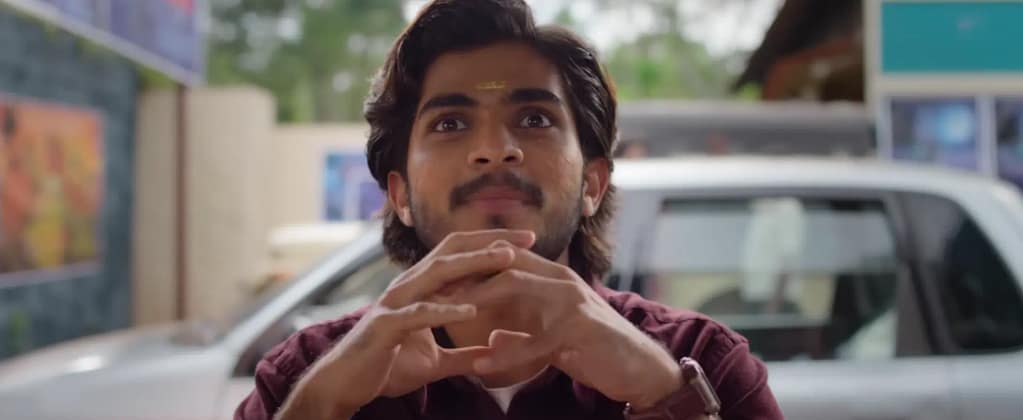
Often you’ll come across films where only the main characters got a fair opportunity to shine. This is one of the rare productions where you’ll find multiple characters get the chances to impress, and everyone passes with flying colors. Starting with Sharaf U Dheen, he gets to display different shades of his character, from a supportive senior to a guy drawing in sorrow, and has played each one beautifully.
His best work appears in the post-credit scene where he rejoices over the latest set of troubles Vineeth is facing in his career. Sreejith Shine, who portrays a young Sachin, has done a great job as well, especially in the sequences leading up to his character’s failed suicide attempt. Roshan Shanavas, who portrays the role of Suji, captures the frustration of a character who isn’t really respected for the work he does.
Roshan’s best moment is a hesitant approval for Vineeth’s film when asked about his opinion. But it is Naslen who has delivered a complete standout performance. While I loved his driven, egoistic director phase as well, it was his earlier comic-centric scenes that blew me away.
His finest moment was when he kept going on about his plans to become a director and becoming a renowned face in the industry with complete belief and excitement, while the camera continued to zoom in and his friends looked at him with shock and amazement.
Final Verdict: Should You Watch Mollywood Times (2026)?
Mollywood Times earns a definitive recommendation from my side, but it’s not for everyone. It isn’t a crowd-pleasing slapstick comedy with neat conclusions, but rather a realistic look at the harsh realities independent creators face, framed through the lens of a dark comedy.
Watch this if you are in the mood for a story about serious artistic struggles delivered with a slightly relaxed, subtle treatment.
Leave a Reply