
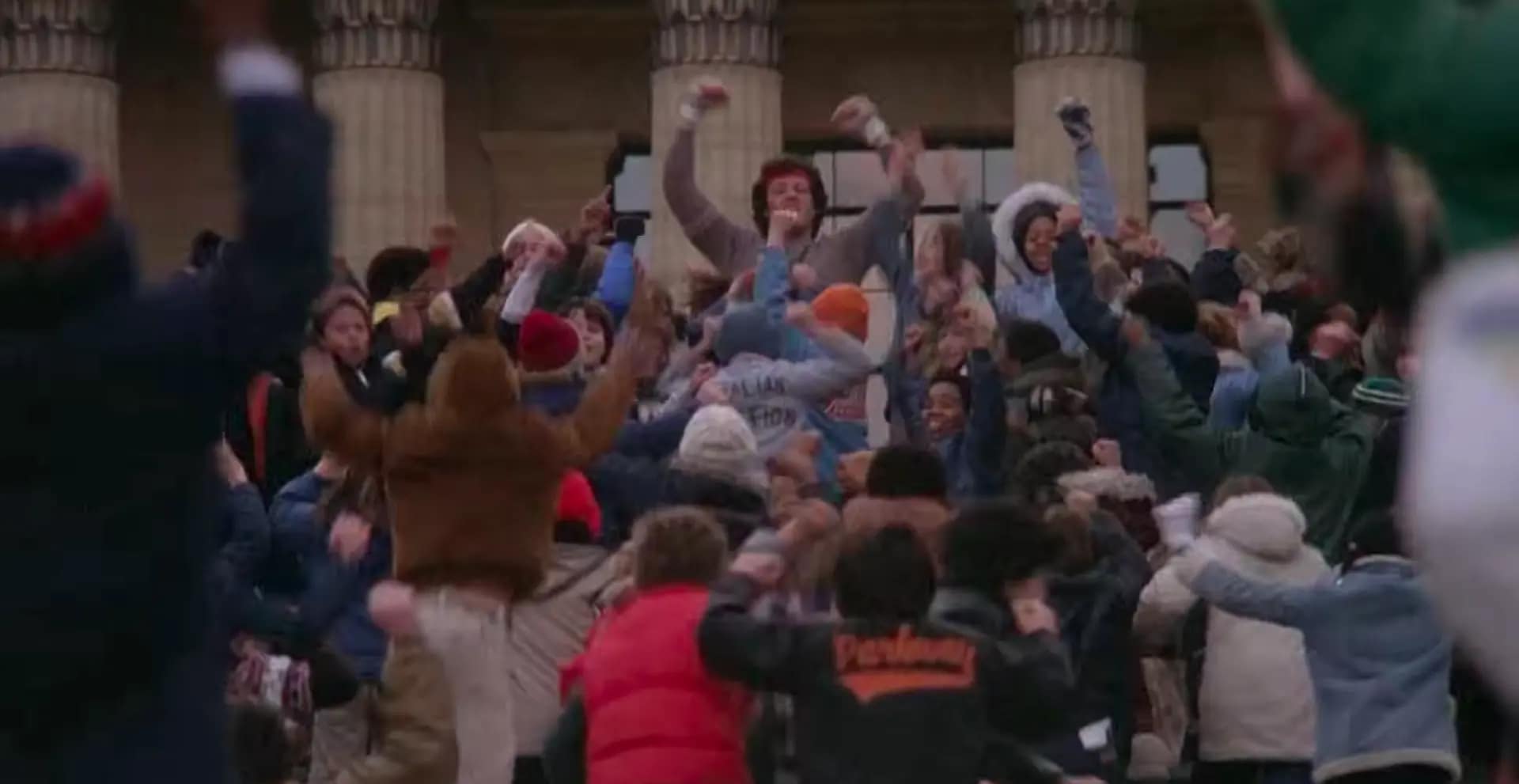
If you look up Rocky Balboa on your favorite search engine, you will discover that he is a fictional character and the main protagonist of the Rocky movie franchise. What it unsurprisingly fails to reveal is exactly how iconic the character is and how its impact extends far beyond movies or the countries in which those movies were shot.
Decoding Why Rocky Balboa Became So Iconic
The first Rocky film came out in 1976, and now, exactly 5 decades later, the character is still immortal in the hearts of millions around the world. On the surface, one might think of Rocky Balboa as just another nicely written character. But it’s way more than that.
It inspired millions across the globe to believe in themselves and continue fighting in their lives, no matter their profession or birthplace. When I look back at why the first film worked so well, even though I would not catch Rocky fever until 2010, it was how relatable the character was.
Rocky Balboa wasn’t born with a silver spoon, far from it. He was an uneducated club fighter who worked as a collection thug for a loan shark. When he is initially offered his first championship fight, his first reaction is refusal. He knows he isn’t on Apollo Creed’s level.
Rocky struggles with self-doubt throughout the film before realizing that he doesn’t need to win against Apollo. He just wants to “go the distance” to prove that he isn’t just “another bum from the neighborhood”. And when he does fight, he exceeds everybody’s expectations, giving tough competition to Apollo, who escapes by a narrow margin.
I believe that struck a chord with people worldwide. It encouraged them to fight on in their lives, even if they dealt with self-doubt, which is a very common theme in life. Also, when you think of it, people do generally perform better when they aren’t pressured.
Rocky did great to present these lessons in the form of a highly inspiring sports film. But that’s not Rocky Balboa alone; the story of the guy playing him was just as inspiring.
The Unbelievable Parallel Between Sylvester Stallone and Rocky Balboa
While this story is widely known, it deserves to be mentioned here to capture how both the person and his creation are legendary in their own right. Before fame, Sylvester Stallone was broke and had to sell his dog for $40 because he couldn’t afford to keep feeding him. When he came up with the screenplay for Rocky, things should have been buttery smooth, but it wasn’t.
Producers loved the script, but they wanted to cast a recognizable actor for that role. Sylvester Stallone stuck to his demand, and United Artists allowed him to star as Rocky Balboa. However, to cover their risk, they restricted the movie’s budget to $1 million and paid him $35,000 as a salary. And the rest, as they say, is history. Rocky went on to become a massive critical and commercial success, changing Stallone’s life forever.
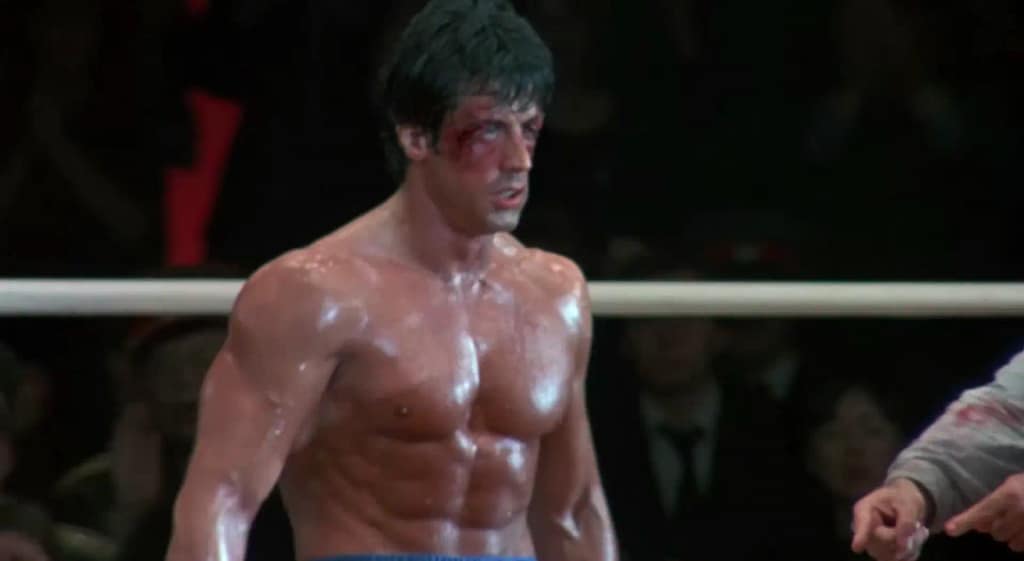
Stallone bought his dog back for $15,000 because the new owner knew how desperate he was and charged him accordingly. He gladly paid that money to get his paw pal back. You see, there was this amazing parallel between Sylvester and Rocky, where both were once down on their knees, but later won big through sheer perseverance and hard work.
Therefore, when people discovered these stories, the emotional connection was twice as heartfelt, knowing the guy behind the story meant every bit. It showed the people that if you put in the work, you can create a better tomorrow, no matter how terrible your present is.
How the Rocky Sequels Maintained the Relatability Factor
With the success of Rocky (1976), both Sylvester Stallone and Rocky had gotten to the next level. Now, the question was whether they could sustain the success, as it’s often said that it is one thing to capture the throne, but it’s a completely different one to defend it. Looking back at it now, we know Team Rocky was mighty successful.
But, a major reason for that success was how they evolved with time systemically. In fact, you can say that Rocky isn’t just a boxing film franchise. It’s a film franchise about different stages of life presented through a boxer protagonist. In “Rocky II”, the character initially enjoys the benefits of his celebrity status.
But his lack of education doesn’t do him many favours as it pertains to employment. He eventually returns to boxing, taking on Apollo Creed for their much-awaited rematch. Rocky struggles in most of his rounds, fighting with an unfamiliar stance, but once he switches to his natural Southpaw stance, he manages to knock Apollo out.
Rocky II taught us how one’s performance is severely limited when one is too focused on the negatives. Instead, you should always strive to do your best regardless of the dangers at hand. A similar lesson is given through Rocky III. In this film, the makers tackle the idea of what happens when you get complacent and meet someone hungrier than you.
Rocky loses his title to James “Clubber” Lang, who is younger and more powerful than he is. After months of training, when Rocky steps in to fight him again, he has realizes that he can’t beat him with power. So, he decides to taunt Lang, which makes him spend his energy without focus. Once he is tired and vulnerable, Rocky launches a flurry of punches to knock him out and win his championship back.
Rocky III taught us to never be complacent and focus on the positives instead of feeling low by comparing ourselves with others. Rocky IV had pretty much the same lesson with the added emphasis on not taking shortcuts to achieve success. For context, Rocky’s opponent, Ivan Drago, used to take regular doses of steroids to aid him, while Rocky trained in nature without any shortcuts. When Rock knocked Drago out, it cemented our faith in hard work.
Taking on Even More Serious Subjects
In my opinion, Rocky IV was the peak of the franchise as it pertains to a focus on boxing. With Rocky V, the film focuses on more emotional aspects, even though the boxing fights and training scenes continue to be an important part of the film.
In Rocky V, he faces financial and health struggles, which cause him to retire and move back to his old working class neighborhood. Desperate to feel relevant again, he begins training a young fighter, Tommy Gunn. He gets so caught up in training him that he starts ignoring his son.
Eventually, he mends his relationship with his son and manages to defeat Tommy in an unsanctioned street fight. Rocky V is a wonderful story about the unconditional love between a father and a son that survives a major roadblock.
Rocky Balboa (or the sixth film in the franchise) focuses on the character’s life 16 years after his street fight with Tommy Gunn. He lost his wife, Adrian, to cancer four years back, while his relationship with his best friend, Paulie and his son, Robert, isn’t as great either.
The world always looks for newer, fresher athletes, and with time, the interest for an older athlete often fades away. This film touches upon this incredibly real yet overlooked topic, coupled with a striking focus on loneliness. When Rocky agrees to take on champion Mason Dixon in an exhibition fight, he faces public ridicule for his old age and the limits of an ageing body.
Rocky defies expectations; not only lasting the full 10 rounds but also putting in a solid performance against the champion. Through such a valiant effort, the film shows that legendary athletes should always be respected, irrespective of their age. On a broader note, it touches upon the insensitivity towards the elderly.
The Ultimate Battle of Life
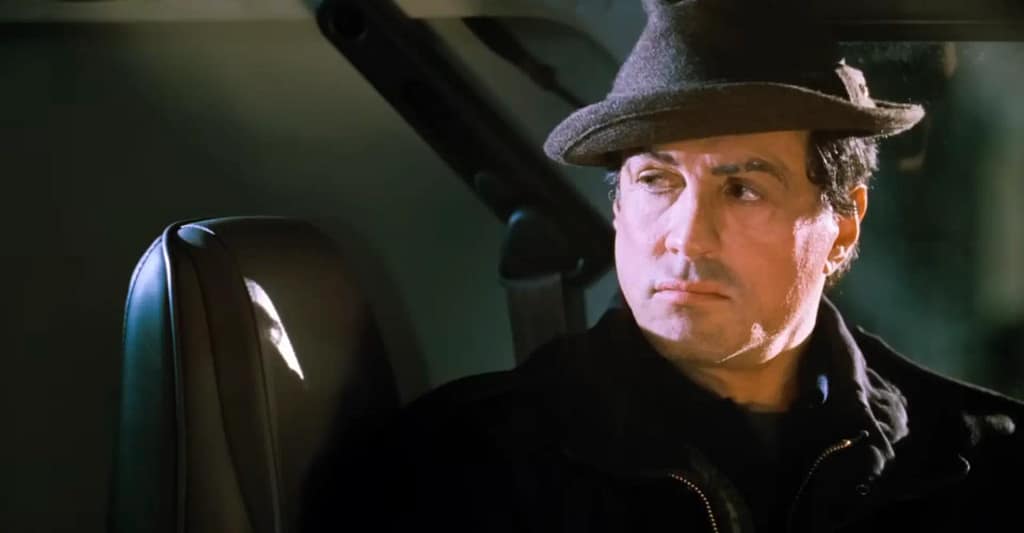
With the Creed franchise taking over from Rocky, the focus shifts to Adonis Creed, son of Apollo Creed. However, Rocky’s battles become even bigger and scarier; they’re just less visible. In Creed I, he faces off against the ever-undefeated Father Time when he gets diagnosed with Cancer.
But Rocky’s first reaction to hearing this news isn’t medical treatment; it’s acceptance. Even though he trains Adonis, he has no desire to continue living. He has already lost his best friend, Paulie, his wife, Adrian, and other friends while also dealing with an estranged relationship with his son. Rocky eventually gets a reason to fight against time when Adonis refuses to train for his upcoming fight until he undergoes treatment.
In one of the most impactful scenes of this franchise, we see Adonis training for battle while Rocky is in a hospital bed, trying his best to survive this round against mortality. It remains the most underrated scene of the franchise in my opinion, because it showed that despite circumstances, each of us is fighting their own battle.
Even though the battle against illness isn’t as glamorous as a boxing fight, I loved that the makers gave the situation the respect it deserved. Along the same lines, I would also like to appreciate everyone going through a silent battle that they are barely surviving, yet they choose to fight on.
And finally, at the end of Creed II, Rocky reconciles with his estranged son, subtly hinting at the importance of having an emotional support system, especially during the later years.
Iconic Visuals and Music
While the Rocky steps and statue are enough proof of the impact this movie had, a lot has contributed to that status. For instance, when I look back at the series, a few scenes stand out besides the obvious ones.
The first set of scenes that comes to my mind is the one where Rocky and Apollo train together. The visual of their hands meeting with a focus on their biceps and running on the beach lives rent-free in my head. These two scenes have become especially famous in 2026 thanks to the meme culture.
Speaking of meme culture, the iconic Rocky tune and its various renditions play a massive role in the success of the franchise. In 2026, it’s possible that some new viewers might not know who Rocky is. However, they would probably know about the Rocky theme that often plays in short videos built around recovering after a breakup.
I find it absolutely proud and fitting that in my ways, the iconic Rocky film and music has become synonymous with fitness. And in my opinion, it completely deserves that honor.
Conclusion: Still Unsure if Rocky Left an Impact?
By now, I am pretty sure you would have the impact of Rocky as a global worldwide cultural phenomena. Yet, if you’re unsure, you don’t need to look further than yours truly. A 90s kid from India who wasn’t even born when the first film was released.
He discovers these movies, decades later, and is now thanking Rocky and Sylvester Stallone for the memories and the lessons even more decades later through his website. I think that accurately sums up the impact the franchise had on just one person, and now, imagine the lives it touched worldwide.


Leave a Reply