
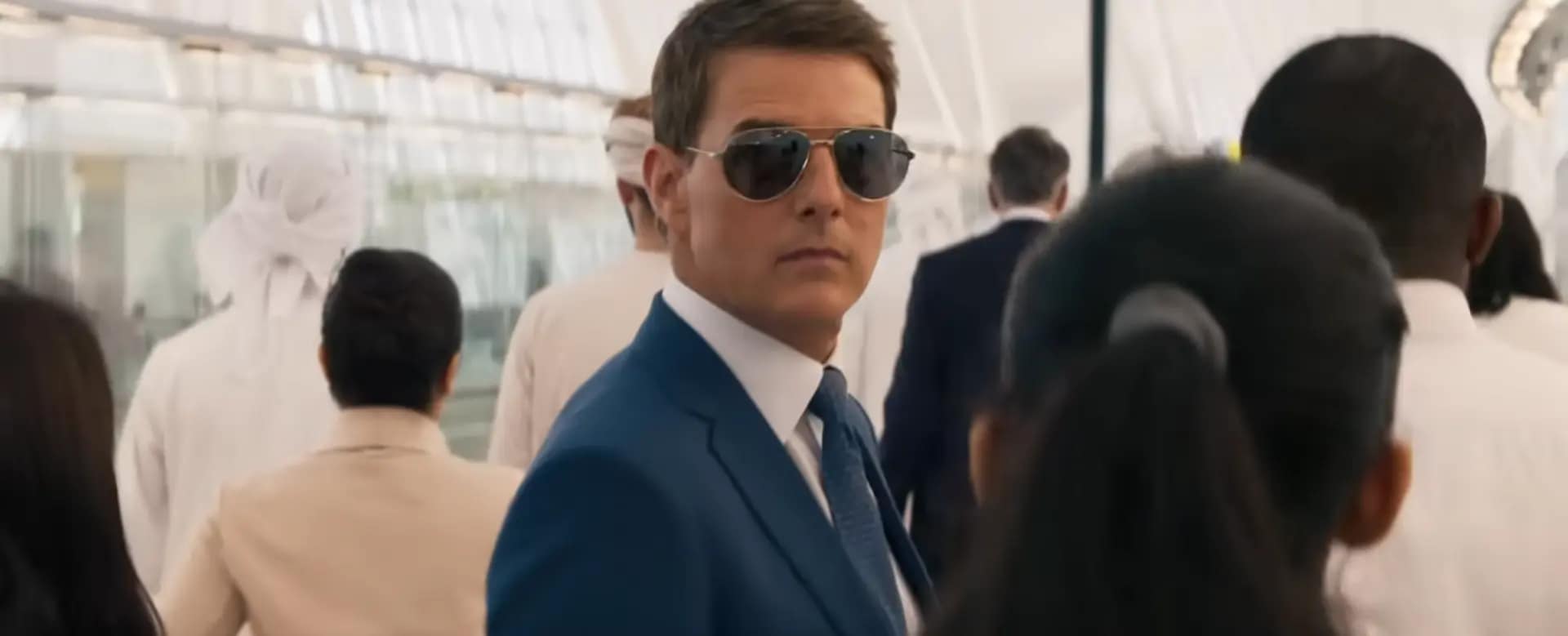
When you think of Tom Cruise, your mind will likely wander to visuals of him hanging off a plane, jumping from Burj Khalifa, or the famous motorcycle cliff jump in Norway. Amongst all these death-defying daredevil stunts and massive box-office collections, it’s easy to forget that he is one of the best actors on the planet, not just a legendary stuntman.
But why does he perform these insanely risky stunts? While he absolutely enjoys the thrill of creating such spectacles, he also treats films like a sacred contract with creators and audiences. Every time he takes up a role, he wants to deliver an experience worthy of our hard-earned money.
Today, we take a look back at Tom Cruise’s legendary career and why he’s so much more than a film icon.
Humble Beginnings: Poverty, Dyslexia, and Life Before Becoming a Household Name
If you look at Tom Cruise (born July 3, 1962, as Thomas Cruise Mapother IV) today and guess what his early years must have been, you might assume he was born with a silver spoon. Instead, he had his own share of challenges.
He grew up in near poverty with an abusive father, Thomas Cruise Mapother III (1934-1984), who used to beat him. Additionally, he suffered from dyslexia, and the fact that he had to change 15 schools in 14 years didn’t help his case either.
On the subject of dyslexia, he later even admitted to keeping his disability hidden from his schoolmates, so he wouldn’t get bullied. Originally from Kentucky, U.S., he spent part of his childhood in Canada when his father began working there.
His mother, Mary Lee (1936-2017), left his father when he was 12 and in sixth grade. Following their separation, the family moved back to the United States.
With this move, the family found peace, but their financial situation only got worse. His mother worked up to three jobs at once, while Tom and his three sisters chipped in with paper routes and odd jobs. In 1978, things changed for the better when his mother married plastics salesman, Jack South, providing the emotional and financial stability the family desperately needed.
They settled in Glen Ridge, New Jersey, which for Tom meant he could study at the same school he wanted to. He briefly attended St. Francis Seminary in Cincinnati on a Catholic church scholarship, as he wanted to become a priest in the Franciscan order, but dropped out a year after.
In his senior year at Glen Ridge High School, he played football as a linebacker, ultimately graduating in 1980. His relationship with his stepfather was relatively better than his biological dad. In fact, it was on South’s suggestion that Cruise auditioned for his high school musical, Guys and Dolls, which ignited his love for acting.
Risky Business To Top Gun: The Breakthrough of a Hollywood Superstar
Following his graduation, he moved to New York in 1980 at 18 years old to pursue acting after getting the blessing of his mother and stepfather for the same. But, as you would expect, Hollywood wasn’t holding out its breath for him yet. To cover his expenses, he worked as a busboy.
He signed with CCA in 1981 and got his first role the same year, in the romantic drama, Endless Love. While subsequent roles helped elevate his stock, his breakout performance came in the 1983 coming-of-age teen comedy film, Risky Business.
The film’s 45-second dance sequence, where he slides across the shirt and the floor in socks and a shirt, remains a timeless piece of pop culture. What this film also did for him was turn him into a youth heartthrob overnight.
1984 would turn out to be a critical year for Cruise even though he didn’t have a release that year. His father died of cancer in 1984, and he admitted to feeling pity for how lonely his father’s life had become.
1986 turned out to be a major year for him both personally and personally. On the work front, he became a massive Hollywood Superstar with the release of the action drama film, Top Gun.
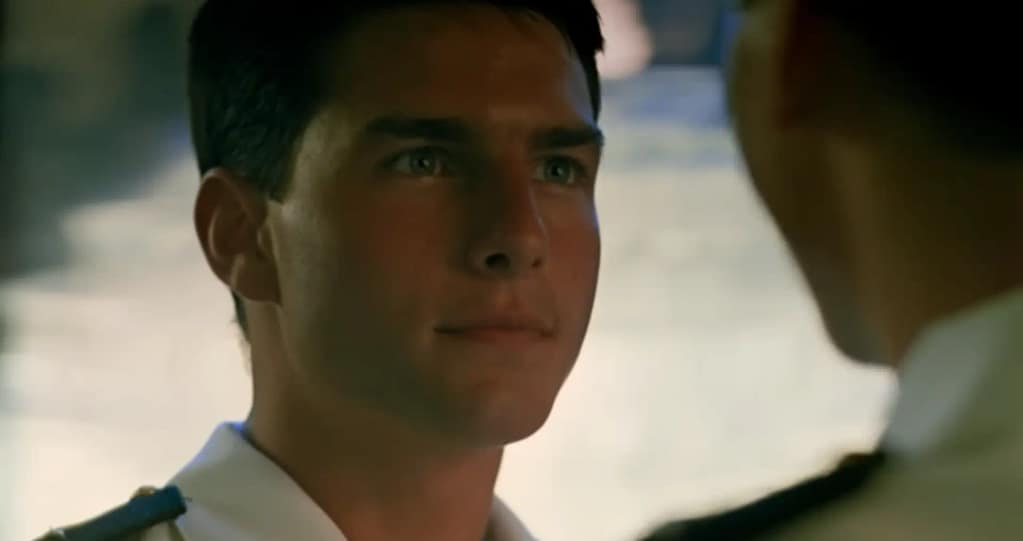
I remember seeing it a few years back, and I realized how cool and impressive his presence was. It remains such an evergreen piece of cinema, so in hindsight, it’s no surprise the film blew up. Off-screen, his personal life also took a massive turn as he became a follower of the religion of Scientology, the same year.
Interestingly, he was introduced to Scientology by actress Mimi Rogers, with whom Cruise had been in a relationship since 1985. The two ultimately tied the knot in 1987, but got divorced three years later in 1990, citing unresolved issues.
Probably one of the greatest impacts this relationship had on Cruise was bringing him into the Scientology world, as he overcame dyslexia by adapting the church’s “Study Terminology” methods.
1988 turned out to be a uniquely personal and successful year for him as he got to star alongside one of his personal favorites, Dustin Hoffman, in Rain Man. When Cruise spotted Hoffman in a restaurant in New York in 1984, he was too starstruck and nervous to approach him until his sister’s push.
So, if, like me, you have ever wondered, can even someone like Tom Cruise get starstruck? Well, there’s your answer.
On the set of Rain Man, Dustin Hoffman mentored him, and Tom Cruise was influenced by his discipline and methodological approach to acting. So, when I hear news of Cruise helping younger emerging talents like Glen Powell, it makes me understand why he does that.
He is simply doing for others what Dustin Hoffman did for him back in the day. To give it back to the business that made him a star in the first place.
As for Rain Man, the film went on to become a huge commercial and critical success. But more importantly for Cruise, it showed audiences that he was more than a youth heartthrob or a charming action star; he’s a brilliant dramatic actor as well, which his following performances only cemented that belief further.
Rain Man, Born on the Fourth of July, and the Launch of the Mission Impossible Franchise
While the success of Rain Man proved that he was a capable dramatic actor worthy of hanging with the best, his next film decimated all doubts about the same. With his performance in the 1989 war film Born on the Fourth of July, based on the life of Vietnam veteran Ron Kovic, he silenced all critics.
Personally, I found this portrayal incredibly raw and heartbreaking, from the character’s initial pride over serving in the military, the heartbreak of not getting fair treatment, falling into the wrong society, and eventually finding his calling as an anti-war activist.
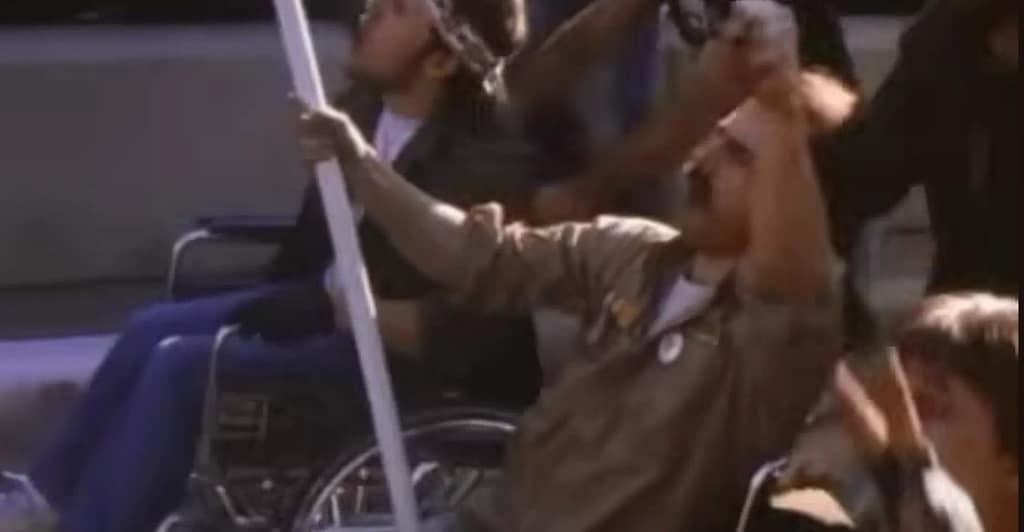
Apart from landing him a Golden Globe for Best Actor in a Motion Picture-Drama, this film did something far more valuable: proving to the masses that he’s more than just a handsome guy driving a fighter jet. It showed that he could play a wide range of characters and a wide spectrum of emotions.
In 1990, he starred in the sports action drama film Days of Thunder, which became commercially successful and eventually became a cult classic despite mixed reviews.
But the film is remembered for another reason as well. It was during the filming of Days of Thunder that Tom Cruise first met co-star Nicole Kidman in 1989, and the two would get married a year later. After a decade together, the couple divorced in 2001, citing irreconcilable differences. Besides Days of Thunder, they also starred in Far and Away (1992) and Eyes Wide Shut (1999).
During their time together, they adopted daughter Isabella (b. December 1992) and son Connor (b. January 1995). Their children were raised in the Church of Scientology and stayed with Cruise following the divorce. Nicole Kidman, on the other hand, didn’t take much active interest in Scientology from the start.
One of the more interesting events about his professional life happened in 1994, when he starred in the horror film Interview with the Vampire, based on Anne Rice’s best-selling novel.
She initially criticized his casting, but upon seeing his performance through an early screening, she wrote him a letter of apology and even paid for a two-page open letter in Vanity Fair and The New York Times, praising the film.
A couple of years later, in 1996, he produced and starred in Mission: Impossible as superspy Ethan Hunt, a role that would define him for the rest of his life. The film wasn’t just a massive success in its own right but also marked the beginning of one of the most successful franchises of all time.
I remember seeing Mission: Impossible in the 2000s on my TV with the help of a CD player. My brother had rented that CD from a store for a day, and I remember him telling me how successful the film was and how awesome Tom Cruise is.
As a kid who barely understood the accent and the story, despite my brother’s best efforts, I was still blown away by it. The final train fight, the explosion, his overall look, and style as he’s trying to steal highly classified digital files all remain etched in my memory.
Even though I didn’t totally get what was happening back then, there was no doubt that the film was way different than what I had ever seen before. It somehow cemented him as the guy of Hollywood, in my eyes. And today, as a mature viewer, I realize that he deserved every bit of that reaction.
In the same year, he starred in the 1996 sports comedy drama film in and as Jerry Maguire. While the film is generally remembered for its iconic visuals and dialogue like “Show me the money” and “You complete me”, it’s also one of the, if not the best, feel-good Tom Cruise films.
The film, in my opinion, feels like a warm hug to the soul. While it wouldn’t be ranked as his most impressive performance, it was lovely to see him portray such a loving and emotionally open character.
In 1999, he won yet another Golden Globe, but this time in a supporting role for his performance in the psychological drama film Magnolia. His performance brilliantly captured the contrast between the character’s public image and his feelings. With his portrayal, he once again proved that he wasn’t afraid of taking professional risks.
Collateral, Katie Holmes, and the Anti-Psychiatry Controversy
In 2003, he starred in the period action drama film The Last Samurai, which brought him a Golden Globe Nomination for Best Actor in a Motion Picture- Drama. What made this role different from other portrayals was how different it was from his usual fearless and super smart roles.
Here, he played a humbled and broken-down character who finds redemption in life through spirituality. Besides capturing this journey beautifully through his expressions, he also spent nearly two years preparing for this role. During this time, he worked on his physical conditioning, Japanese swordsmanship (using a Katana), language, and customs.
While there are multiple reasons that led to Japan recognizing October 10 as Tom Cruise Day, the film did play a substantial role in it. The following years would bring success and controversies in his life. In 2004, he starred in the action thriller film Collateral as the hitman, Vincent.
When I look back at Cruise’s career, there’s nothing that screams unique as much as Collateral. In the film, he portrays a cold, calculated killer with a salt-and-pepper hairstyle. I remember seeing the film, and the experience was so immersive.
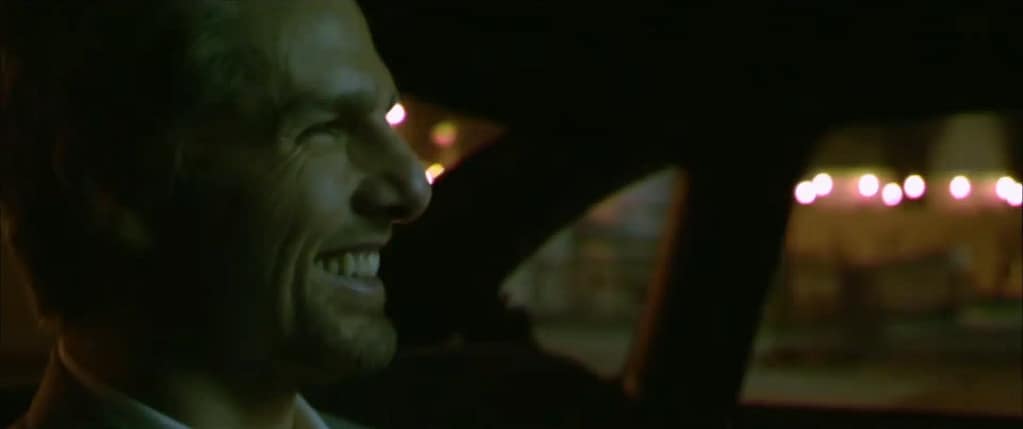
On one hand, it kept me at the edge of my seat, fearing for Jamie Foxx’s character, but on the other, I was so interested in Cruise’s character even though he was the villain of the story.
2005 would turn out to be a really interesting year for him, as he found himself in the midst of personal and professional happiness as well as a major controversy.
The most straightforward of the three would be the praise he gained for his grounded performance in the science fiction action-thriller film, War of the Worlds. His personal life began to blossom again as he began dating actress Katie Holmes in April 2005. A year later, their daughter, Suri Cruise, was born and they got married in November 2006.
Unfortunately, they divorced in 2012, and Cruise later admitted that Holmes filed for divorce partly to save their daughter from the Church of Scientology. Holmes got primary custody of their daughter, who now goes by Suri Noelle, dropping her father’s surname for her mother’s.
Once the marriage fell apart, Katie Holmes left the Church of Scientology to return to her Roman Catholic roots. Expectedly, her daughter, Suri, was raised in the Roman Catholic church following the divorce.
Tom Cruise became the subject of a major controversy in June 2005 when he appeared on The Today Show to promote War of the Worlds. During the heated exchange with host Matt Lauer, he called psychiatry a “pseudoscience” and criticized actress Brooke Shields for using antidepressants to treat postpartum depression.
The world didn’t take kindly to his comments, especially the medical community who believed his comments only added to the stigma around mental health. Tom Cruise later apologized in person to Shields in August 2006.
When I first learned about this controversy a few years back, it didn’t surprise me. It felt entirely on-brand for a man who hung off a flying plane to deliver a spectacular experience for his audience to disbelieve in psychiatry.
Of course, he believes in the power of his mind, given everything he has been through and achieved in life. It reminded me of MMA legend Khabib Nurmagomedov, who doesn’t believe in traditional recovery, instead advising people to simply sleep it off. The hyper-elite performers operate on a completely different frequency, and it’s okay.
So, my initial reaction was that he is entitled to his opinion, controversial as it may be. The media just wants to take a shot at him because he is super famous. It took me a while to understand that average folks like you and me might not care about it, but it can leave a huge impact on impressionable minds.
For instance, a teenager who needs mental help might shy away from it because his favorite star doesn’t approve of it. It’s situations like these that don’t affect the majority, but global influential stars should be cautious about them. It’s an unwritten responsibility every major celebrity takes on whether they like it or not, because their words can influence many.
In 2008, he starred in the satirical action comedy film Tropic Thunder, where he played a balding, arrogant studio head. His performance in the film is remembered and loved even today. Interestingly, Tom Cruise created this character from scratch.
When pitching the character, he famously said, “I want to have fat hands, and I want to dance” to director Ben Stiller. And the result, as you already know, was an incredibly memorable character and an even more memorable dance sequence that continues to live in our heads rent-free.
With this role, he proved yet again that he wasn’t afraid to play characters that were a complete 180 of his real-life daredevil image.
Saving Cinema: Top Gun Maverick, Practical Stunts, and Return to Dramatic Roles with Digger
Starting with the 2010 action comedy film, Knight and Day, he shifted his focus to mostly action-driven films. However, there were no shortages of achievements even in this era of Tom Cruise. While the jumps from Burj Khalifa or a cliff in Norway or hanging off a plane were all mighty impressive, I find his following work to stand out even more.
During 2020, Tom Cruise was gearing up for the release of Top Gun: Maverick, the sequel to the 1986 classic. Then, COVID hit and the world got into unfamiliar territory for everyone. For the film industry, that meant the rise in popularity of streaming apps and dark clouds hanging over the future of theater.
You might feel the biggest movie star would be immune to this pressure, but he wasn’t. Paramount was heavily considering releasing it on their own or other streaming platforms, but Tom Cruise flat-out refused it, saying it’s meant for the theatrical experience.
During the lockdown, he even called theater owners personally to assure them that theater business wasn’t dying and to support cinema workers during such testing times.
When it was eventually released in 2022, it grossed $1.5 billion worldwide, bringing a huge sigh of relief for theater owners. On the matter, Steven Spielberg even said that he might have “saved the entire theatrical industry.” When I look at this entire situation, I feel it’s incredibly poetic how everything turned out.
For Cruise, the film that made him a superstar in 1986 turned to its successor in 2022, to put him back at the top. For theater owners and fans like me, who have grown up watching him and considering him a massive influence on how we look at Hollywood, it made sense to see the main guy make things right for the industry yet again.
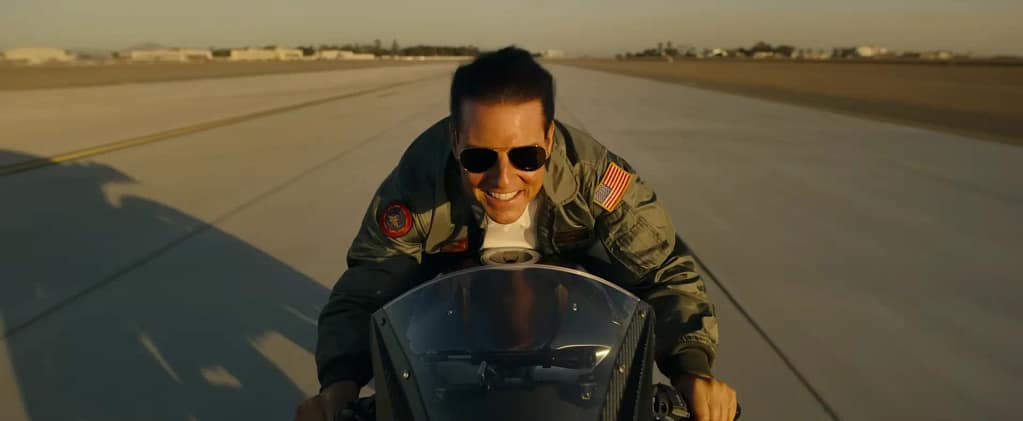
And from a general culture viewpoint, Top Gun, which was a timeless piece of pop culture back then, would look to its sequel to bring the community back together after a devastatingly challenging time.
Additionally, I find it fitting that through films like Oblivion (2013), Mission Impossible – Dead Reckoning Part One (2023), and Mission Impossible – The Final Reckoning (2025), the guy who literally jumped from the world’s tallest building to preserve practical art serves as our messenger warning us about the dangers of technology. Even though these films might not have the commercial milestones the creators might have hoped for, the perspective they shared remains vital.
His 2026 release, Digger, marks his pivotal return to character-driven cinema, shedding the action star persona to collaborate with Director Alejandro González Iñárritu. It’s a reminder that even after his remarkable achievement with Top Gun: Maverick, Cruise remains eager to test his limits as an actor.
The Sacred Contract: How Will Tom Cruise Be Remembered?

When I was a kid, I remember saying, “Name’s Cruise, Tom Cruise”, and feeling really proud for absolutely no reason. As time passed, I realized the absurdity of it, like, what’s so great about an introduction?
Gradually, I understood that the cool factor wasn’t the line itself but what he represented for me: the peak of human dedication and excellence. It instilled a belief in a kid who didn’t even know trigonometry yet that if you dedicate yourself to a mission, anything’s achievable.
While I am saying this, I also realize that some readers might roll their eyes at this, and that’s fine. As amazing as Tom Cruise has been in front of the screen, his life off-camera has been far from perfect.
While I personally separate his personal life from his artistic legacy and professional life, I understand if others cannot. But even through a critical lens, it’s impossible to deny how unparalleled this man’s career has been.
I believe one of the most accurate measures of his impact is covered in the fantasy TV series, The Stand. In that series, the character Harold Lauder (portrayed by Owen Teague), keeps a picture of Tom Cruise taped to his wall, staring at it to study how to project charisma, charm, and confidence to impress the girl he likes.
In my opinion, Cruise would be remembered as the gold standard for those traits, besides dedication and excellence.
Even if mankind were stuck in a god-forbid apocalyptic world, people would share tales of people who made them feel something. People like Tom Cruise, who absolutely didn’t need to put his mind and body on the line consistently, when he could have simply chased easy paychecks based on his name and fame alone.
Instead, he consistently pushes the envelope for theatrical brilliance, because he doesn’t look at his most dedicated fans as a guaranteed revenue stream. Instead, he looks at us as someone he has to consistently win over and reward with an experience we will never ever forget. And when it’s all said and done, he decides to do it all over again.
Leave a Reply